Industrial boiler tubes operate under some of the harshest conditions found in manufacturing plants, refineries, chemical processing facilities, and power generation units. These critical components continuously transfer high levels of heat to water, producing the high-pressure steam required to keep operations running efficiently.
However, over time, minerals present in the water supply begin accumulating inside the tubes, forming stubborn layers of scale. What starts as a thin deposit can gradually turn into a major operational challenge, reducing efficiency, increasing fuel consumption, and potentially causing expensive equipment failures.
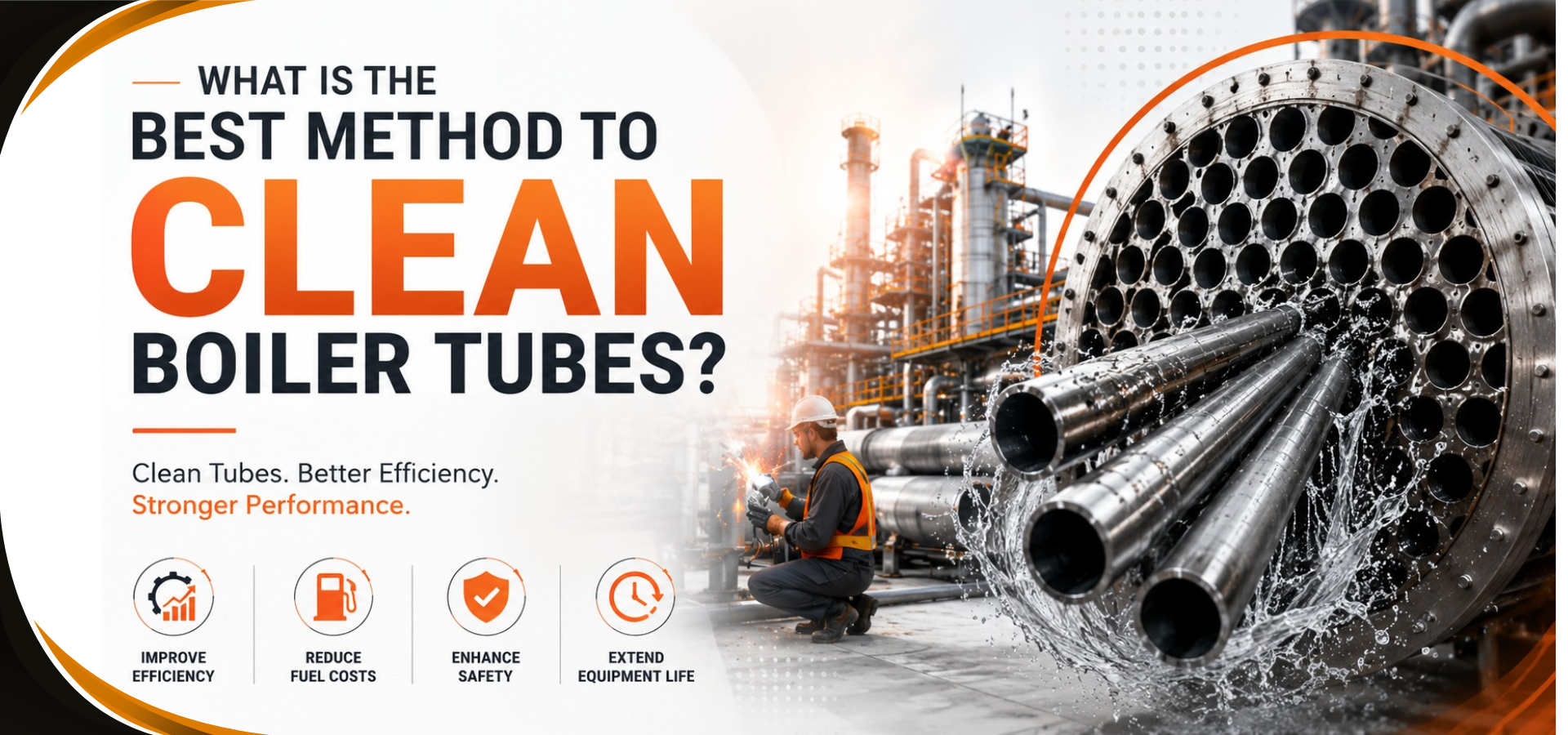
So, what is the best method to clean boiler tubes?
The most effective approach typically combines mechanical brushing, chemical descaling, and high-pressure hydro-jetting. Each method targets a different type of deposit, ensuring thorough cleaning and restoring optimal heat transfer performance.
In this guide, we'll explore why scale forms, how it impacts industrial operations, and the most effective maintenance strategies to keep your boiler system running safely and efficiently.
Understanding Why Scale Forms Inside Boiler Tubes
Imagine a power plant operating at full capacity during peak demand. Everything appears normal until steam output begins declining. Operators increase fuel input to compensate, yet performance continues to drop.
The hidden culprit is often scale buildup inside the boiler tubes.
Most water sources naturally contain dissolved minerals such as:
- Calcium
- Magnesium
- Silica
- Iron compounds
When water is heated inside steam boiler piping, these minerals separate from the water and attach themselves to the hot internal surfaces of the tubes.
Over time, these deposits form a hard insulating layer that becomes increasingly difficult to remove.
Why Water Quality Matters
The hardness of the incoming water directly affects how quickly scale develops.
Facilities operating in regions with mineral-rich water often experience rapid buildup, especially when water treatment systems are inadequate or poorly maintained.
Pro Tip
Investing in proper feedwater treatment is often far less expensive than dealing with emergency boiler shutdowns and tube replacements.
How Scale Impacts Boiler Performance
Many facility managers underestimate the impact of a thin layer of scale.
In reality, scale acts as an effective thermal insulator.
Instead of heat transferring directly through the metal wall into the water, the scale creates a barrier that slows the process significantly.
As a result:
- More fuel is required to generate the same steam output.
- Heat transfer efficiency declines.
- Equipment operates under greater thermal stress.
- Maintenance costs increase.
Studies show that even a small layer of mineral deposits can increase fuel consumption by approximately 2%.
Thicker deposits containing silica and iron can push energy losses beyond 6%.
The Hidden Risk: Tube Failure
When heat cannot transfer efficiently into the water, it remains trapped within the tube wall.
This can lead to:
- Overheating
- Metal deformation
- Thermal fatigue
- Tube ruptures
For facilities using high-pressure boiler tubes, this risk becomes especially serious.
Pro Tip
If fuel usage suddenly increases without changes in production demand, inspect the boiler system for scale buildup before assuming equipment failure.
Early Warning Signs Your Boiler Tubes Need Cleaning
One of the biggest mistakes facilities make is waiting until a major failure occurs.
Fortunately, boiler systems usually provide warning signs long before serious damage develops.
1. Reduced Heat Transfer Efficiency
If the boiler requires more time to generate steam than usual, internal fouling may be restricting heat transfer.
What to Monitor
- Steam generation rate
- Operating pressure
- Boiler response time
2. Rising Fuel Consumption
A sudden increase in gas, oil, or coal usage often indicates thermal inefficiency caused by internal scaling.
Real-World Example
A manufacturing facility noticed a 5% increase in monthly fuel costs despite maintaining the same production volume. Inspection later revealed significant mineral deposits inside several sections of their seamless boiler tubes.
3. Frequent Temperature Alarms
Modern automation systems constantly monitor tube surface temperatures.
When heavy deposits restrict water flow, localized hot spots can develop quickly.
Common warning signs include:
- High-temperature alerts
- Unexpected shutdowns
- Repeated safety trips
Pro Tip
Review operating logs weekly. Small performance changes often reveal scaling problems before they become major repairs.
Essential Safety Measures Before Cleaning Boiler Tubes
Cleaning industrial boilers involves confined spaces, high temperatures, pressurized systems, and potentially hazardous chemicals.
Safety should always be the first priority.
Lockout and Tagout Procedures
Before maintenance begins:
- Isolate electrical systems.
- Shut off fuel sources.
- Close steam and water valves.
- Apply lockout-tagout controls.
Verify Safe Atmospheric Conditions
Inside large boiler chambers, dangerous gases may accumulate.
Maintenance teams should:
- Use industrial ventilation equipment.
- Test oxygen levels.
- Check for toxic gases before entry.
Confirm Complete Cooling
Boiler components can retain heat for extended periods after shutdown.
Technicians must verify safe temperatures before beginning work.
Pro Tip
Never rely solely on shutdown duration. Always confirm actual metal temperatures using calibrated measuring equipment.
Best Methods for Cleaning Boiler Tubes
Different types of fouling require different cleaning approaches.
The most effective maintenance programs often combine multiple techniques.
1. Mechanical Brushing
Mechanical cleaning uses rotating brushes or scrapers attached to flexible shafts.
These tools physically remove:
- Loose soot
- Ash deposits
- Light scale buildup
Advantages
- Cost-effective
- Quick execution
- No wastewater generation
Best For
- Routine maintenance
- Straight pipe sections
- Light contamination
Pro Tip
Use brushes compatible with the tube material to avoid surface damage.
2. Chemical Descaling
When deposits become too hard for physical cleaning, chemical treatment becomes necessary.
Specialized cleaning solutions circulate throughout the system and dissolve mineral deposits.
Benefits
- Reaches inaccessible areas
- Removes severe scale
- Restores flow efficiency
Important Consideration
The cleaning solution must match the metallurgy of the alloy steel boiler tubes to prevent corrosion.
Pro Tip
Always perform deposit analysis before selecting a chemical cleaning solution.
3. High-Pressure Hydro-Jetting
Hydro-jetting uses extremely high-pressure water streams to remove stubborn deposits.
Industrial systems often operate between:
- 10,000 PSI
- 20,000+ PSI
The process effectively removes:
- Heavy scale
- Sludge
- Blockages
without damaging the tube surface.
Benefits
- Excellent cleaning performance
- Suitable for U-bends and complex geometries
- Leaves a smooth internal surface
Pro Tip
Hydro-jetting is often most effective after chemical descaling has loosened heavy mineral deposits.
Comparing Boiler Tube Cleaning Methods
Mechanical Brushing
Best Suited For: Light soot and loose deposits
Key Advantage: Fast and economical cleaning for regular maintenance schedules.
Chemical Cleaning
Best Suited For: Heavy mineral scale
Key Advantage: Dissolves stubborn deposits in hard-to-reach internal sections.
Hydro-Jetting
Best Suited For: Severe blockages and thick deposits
Key Advantage: Provides deep cleaning without abrasive damage to the tube interior.
How to Verify Boiler Tube Cleanliness After Cleaning
Cleaning alone does not guarantee system reliability.
A thorough inspection should follow every maintenance cycle.
Borescope Inspection
High-resolution borescopes allow technicians to visually inspect internal tube surfaces for:
- Remaining deposits
- Corrosion
- Surface damage
Ultrasonic Thickness Testing
Ultrasonic equipment measures remaining wall thickness and helps identify hidden weaknesses.
This process is particularly important for power plant boiler tubes operating under extreme pressures.
Pro Tip
Maintain inspection records after every shutdown. Historical data helps predict future maintenance requirements more accurately.
Preventing Future Scale Buildup
The most cost-effective cleaning strategy is prevention.
Facilities can significantly reduce scale formation through:
Water Treatment Programs
Implement:
- Water softeners
- Reverse osmosis systems
- Demineralization units
to minimize mineral content before water enters the boiler.
Routine Blowdown Procedures
Regular blowdown removes concentrated contaminants before they can settle on tube surfaces.
Benefits include:
- Reduced scaling
- Improved water quality
- Better operational efficiency
Scheduled Preventive Maintenance
Routine inspections and cleaning help prevent emergency shutdowns and costly repairs.
A proactive maintenance schedule ensures:
- Better fuel efficiency
- Longer equipment life
- Improved safety
- Reduced operational downtime
Pro Tip
The most successful facilities clean boiler systems before performance declines rather than waiting for visible operational problems.
Final Thoughts
Keeping industrial boiler systems clean is essential for maximizing efficiency, reducing fuel costs, and preventing unexpected failures.
Whether maintaining seamless boiler tubes, steam boiler piping, power plant boiler tubes, or high-pressure boiler tubes, the combination of mechanical brushing, chemical descaling, and hydro-jetting delivers the most effective results.
While cleaning restores performance, prevention remains the most valuable long-term strategy. Proper water treatment, regular inspections, and scheduled maintenance can significantly extend the service life of your system while reducing operational risks.
For industries seeking reliable and durable boiler tubing solutions, South India Tubes provides high-quality products engineered to perform under demanding operating conditions while supporting safe and efficient plant operations.


