
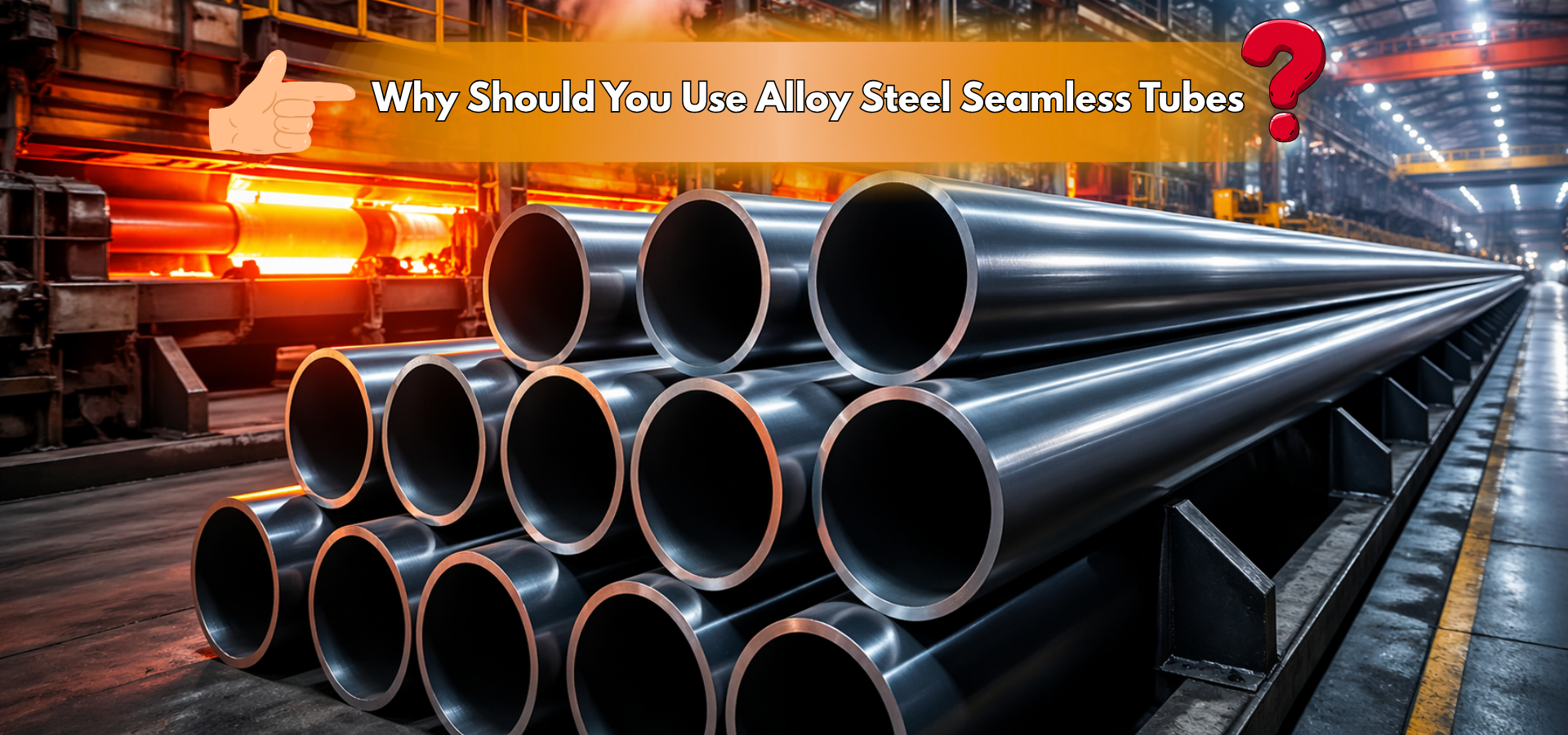
In today’s fast-evolving industrial world, materials are no longer just about strength—they’re about performance, efficiency, and long-term reliability. This is exactly where alloy steel seamless tubes stand out.
Imagine a power plant operating under extreme temperatures or an oil refinery transporting highly corrosive fluids. In such demanding environments, ordinary materials fail—but alloy steel seamless tubes continue to perform.
Let’s break down everything you need to know—in a simple, practical, and actionable way.
What Are Alloy Steel Seamless Tubes?
Alloy steel seamless tubes are manufactured by enhancing carbon steel with elements like chromium, molybdenum, nickel, or manganese. These additions improve properties such as:
- Strength
- Corrosion resistance
- Heat tolerance
- Durability
Unlike welded tubes, seamless tubes have no joints, making them stronger and more reliable under pressure.
Real-World Example:
Think of a boiler in a thermal power plant. It operates under high pressure and temperature. A welded pipe could fail at the joint—but a seamless tube ensures uniform strength throughout.
Pro Tip:
Always match the alloy composition with your application. For example, chromium-molybdenum alloys are ideal for high-temperature environments.
How Are Alloy Steel Seamless Tubes Made?
The manufacturing process involves:
Heating solid steel billets
Piercing them to create a hollow structure
Rolling and shaping into tubes
Adding alloying elements based on required properties
Each additive changes the behavior of the steel:
- Chromium → Corrosion resistance
- Molybdenum → Strength at high temperatures
- Nickel → Toughness
Story Insight:
A chemical plant once switched from standard carbon pipes to alloy steel tubes with molybdenum. Result? 50% longer lifespan and fewer shutdowns.
Pro Tip:
Ask your supplier about the exact chemical composition, not just the grade name.
Key Benefits of Alloy Steel Seamless Tubes
1. High Strength & Durability
Alloy steel is engineered to handle extreme pressure and stress.
- Ideal for heavy-duty industries
- Resistant to wear and tear
Use Case: Oil drilling pipelines facing underground pressure.
Pro Tip: Choose higher chromium content for better durability.
2. Excellent Corrosion Resistance
Unlike ordinary steel, alloy steel resists oxidation—even in:
- Marine environments
- Chemical plants
- Humid conditions
Example: Offshore rigs rely on alloy tubes to prevent rust damage.
Pro Tip: For coastal or chemical exposure, go for Ni-Cr-Mo alloys.
3. High Temperature Performance
Alloy steel maintains strength at extreme temperatures.
- Used in boilers and heat exchangers
- Suitable for power plants
Example: Superheaters in thermal plants operate at 500°C+.
Pro Tip: Grades like P91 or T91 are best for high-temperature use.
4. Low Thermal Expansion
Some alloys expand very little when heated.
- Prevents structural distortion
- Maintains precision in systems
Example: Precision equipment in refineries.
Pro Tip: Always check the coefficient of expansion for critical systems.
5. Unique Properties (Shape Memory & Magnetic Behavior)
- Shape memory alloys return to original shape after heating
- Magnetic permeability helps in electrical applications
Example: Used in motors, generators, and switchgear systems.
Pro Tip: These properties are niche—use them only when required.
Applications of Alloy Steel Seamless Tubes
Oil & Gas Industry
- Drilling
- Pipelines
- Well casing
Built to handle extreme pressure and corrosive fluids.
Power Plants
- Boilers
- Heat exchangers
- Superheaters
Designed for high heat and pressure resistance.
Chemical & Petrochemical Industry
- Reactors
- Piping systems
Resistant to chemical corrosion.
Automotive Industry
- Engine components
- Exhaust systems
Offers heat resistance and strength.
Construction & Infrastructure
- Bridges
- High-rise buildings
High strength-to-weight ratio.
Pro Tip:
Choose application-specific grades instead of using one type for all industries.
Different Grades of Alloy Steel Tubes
Low Pressure Grades
- P1, P2
✔ Used in boilers and pressure vessels
High Temperature Grades
- P5, P9, P11, P22
✔ Chromium-molybdenum alloys
✔ Excellent heat resistance
Premium Performance Grade
- P91
✔ High creep strength
✔ Ideal for supercritical power plants
Heat Exchanger Grades
- T5, T9, T11, T22, T91
- Same properties as P grades but used in tubing applications.
Pro Tip:
Never choose grade based on cost alone—match it with temperature & pressure conditions.
Types of Alloy Steel Used
1. Low Alloy Steel
- Cost-effective
- Improved strength
2. Chromium-Molybdenum Steel (Cr-Mo)
- High temperature resistance
- Strong and durable
3. Nickel-Chromium-Molybdenum Steel (Ni-Cr-Mo)
- Excellent corrosion resistance
- Ideal for harsh environments
4. Stainless Steel Alloys
- Hygienic
- Used in pharma and food industries
5. Dual-Phase Steel
- Balanced strength and flexibility
- Used in automotive applications
Pro Tip:
For long-term savings, invest in Cr-Mo or Ni-Cr-Mo steels instead of cheaper alternatives.
Maintenance Tips for Long Life
Even the best materials need proper care.
Key Practices:
- ✔ Regular inspection
- ✔ Proper cleaning
- ✔ Dry storage
- ✔ Protective coatings
- ✔ Controlled temperature
Example: A refinery reduced failures by 40% just by implementing routine inspections.Pro Tip:
Maintain a logbook of inspections—this helps predict failures early.
How to Choose the Right Alloy Steel Seamless Tube
1. Application Requirements
- Pressure
- Temperature
- Environment
2. Material Composition
- Chromium, molybdenum, nickel content
3. Dimensions
- Outer diameter
- Thickness
- Length
4. Standards
- ASTM
- ASME
- API
5. Manufacturer Quality
Choose trusted suppliers like South India Tubes Pvt Ltd for reliable products.
6. Cost vs Value
- Higher initial cost
- Lower long-term maintenance
Pro Tip:
Focus on lifecycle cost, not just purchase price.
Final Thoughts
Alloy steel seamless tubes are not just a material choice—they are a strategic investment for industries aiming for durability, safety, and efficiency.
By understanding their properties, applications, and selection criteria, you can:
✔ Improve operational reliability
✔ Reduce maintenance costs
✔ Enhance long-term performance
If you're planning to upgrade your industrial systems, choosing the right seamless tubes can make all the difference—and working with trusted manufacturers like South India Tubes Pvt Ltd ensures you get both quality and guidance.


