
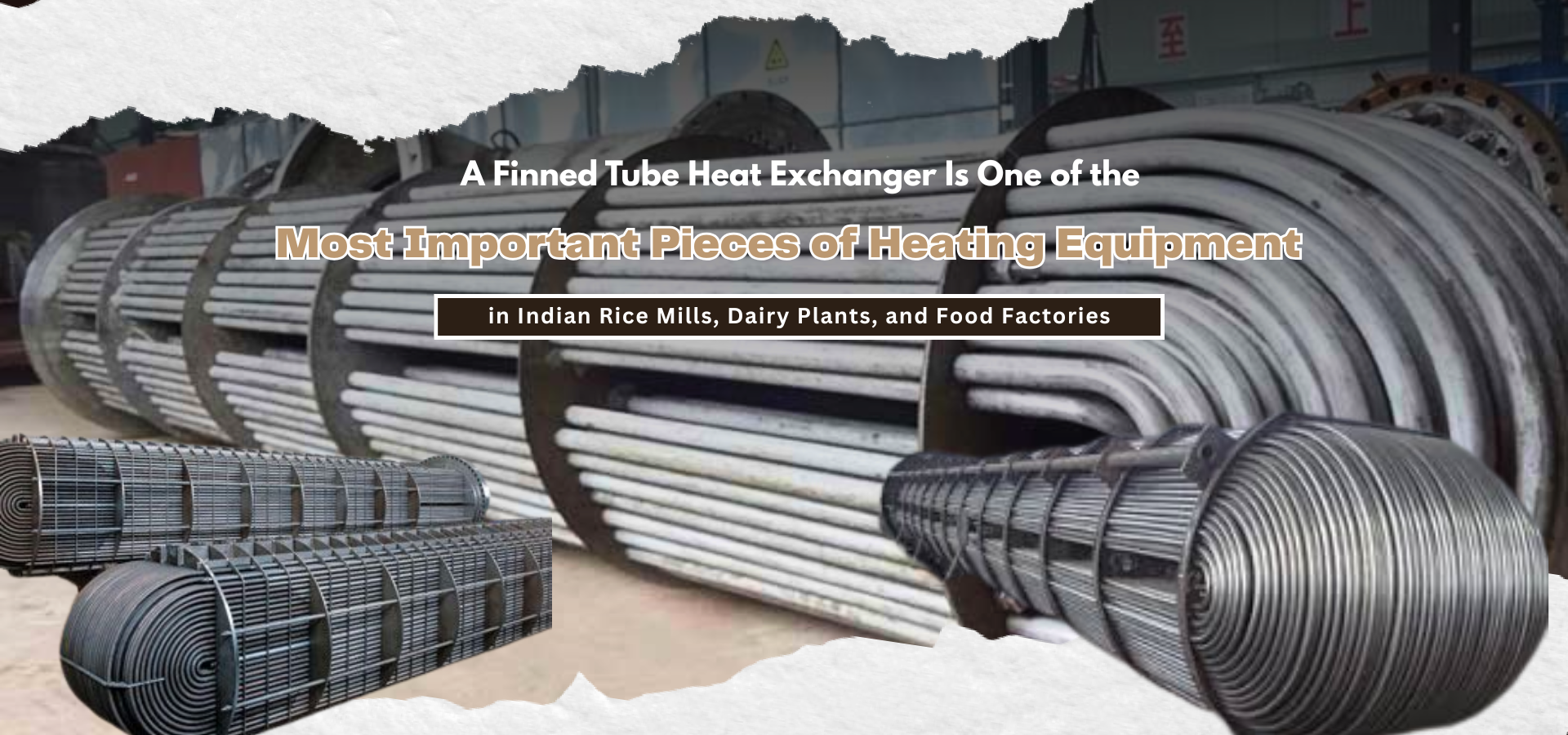
A finned tube heat exchanger plays a silent but critical role in Indian rice mills, dairy plants, and food processing factories. It delivers hot, clean, and controlled air to paddy dryers, spray dryers, ovens, parboiling systems, seasoning lines, and cleanrooms.
When selected correctly, it reduces fuel consumption, improves drying uniformity, protects product quality, and minimizes downtime. When selected poorly, it leads to high energy bills, uneven drying, contamination risks, and constant maintenance issues.
This guide provides a practical, shop-floor-focused approach to selecting the right finned tube heat exchanger for Indian plant conditions, with special attention to choosing between aluminium finned tube and stainless steel fin tube designs.
Where Finned Tube Heat Exchangers Are Used in These Industries
Understanding the application is the first step toward correct selection.
Rice Mills
Rice mills typically use finned tube heat exchangers in:
- Paddy dryers and paddy drier radiators
- Husk-fired hot air generators
- Steam-to-air heaters for parboiling
- Diesel generator or boiler exhaust heat recovery units
Real-World Scenario
During peak harvest season, a rice mill may operate continuously for weeks. The drying air temperature often ranges between 110–130°C. The environment is filled with husk dust and ash. If fin spacing is too tight, clogging happens quickly, reducing airflow and drying performance.
Pro Tip:
In dust-heavy environments like rice mills, prioritize wider fin spacing and easy cleaning access over maximum thermal efficiency.
Dairy Plants
Dairy facilities use finned tube heat exchangers in:
- Spray dryer air heaters for milk powder and whey
- AHUs for pasteurisation rooms and cheese production
- Clean corridors and packaging halls
In dairy plants, hygiene is non-negotiable. Equipment must withstand wash-down cleaning and avoid contamination risks.
Pro Tip:
If coils are installed inside hygienic zones or high-care rooms, stainless steel fin tubes are generally the safer long-term option.
Food Processing Plants
Food factories use finned tube heat exchangers in:
- Tray dryers and belt dryers
- Baking ovens and seasoning lines
- Spice drying systems
- Instant food production lines
Air quality, temperature, and cleaning frequency vary significantly depending on the product.
Pro Tip:
Avoid a one-size-fits-all design. Evaluate each zone separately based on dust load, temperature, and cleaning practices.
Step-by-Step Approach to Choosing the Right Finned Tube Heat Exchanger
Instead of selecting material first, follow a structured evaluation.
Step 1: Clarify the Duty Conditions
Define:
- Heating medium (steam, thermic fluid, hot water, exhaust gas)
- Airflow rate
- Required outlet temperature
- Ambient temperature extremes
- Daily operating hours
Example:
If you design a paddy dryer based only on a 30°C average ambient temperature, it may fail to deliver required outlet air during cold winter mornings or high monsoon humidity.
Key Takeaway:
Always size the finned tube heat exchanger for the coldest and most humid operating conditions, not average values.
Step 2: Assess Air Quality and Fouling Risk
Airborne contamination directly impacts heat transfer.
Common issues:
- Husk dust in rice mills
- Sticky spice particles in seasoning plants
- Oil vapours in bakery lines
High dust requires:
- Wider fin spacing
- Stronger fin construction
- Accessible cleaning layout
Cleaner environments allow denser fins for higher efficiency.
Pro Tip:
In dusty zones, reduced fin density often improves long-term performance more than high initial heat transfer ratings.
Step 3: Match Cleaning Method to Material
Ask how cleaning is performed:
- Dry air blow or brushing
- Water jet cleaning
- Steam cleaning
- Chemical wash
Aluminium Finned Tube
- Performs well in dry cleaning environments
- May deform under aggressive wet cleaning
Stainless Steel Fin Tube
- Withstands water and chemical cleaning
- Maintains structural integrity longer
Key Takeaway:
If your plant requires frequent wash-down or foam cleaning, stainless steel fin tube offers greater durability.
Step 4: Evaluate Hygiene and Product Safety
If heated air directly contacts:
- Milk powder
- Spices
- Ready-to-eat food
Material selection becomes critical.
Recommendation:
- Stainless steel fin tube for hygienic and controlled areas
- Aluminium finned tube suitable for utility zones with limited product exposure
Step 5: Consider Temperature and Corrosion
Plants near coastal areas or chemical processing zones face higher corrosion risks.
Aluminium Finned Tube
Suitable when:
- Air temperature is moderate (below 150°C)
- Corrosion exposure is limited
- Budget constraints exist
- Cleaning is mostly dry
Advantages:
- High thermal conductivity
- Lightweight
- Cost-effective
Limitations:
- Softer fins
- Sensitive to aggressive cleaning
- Less resistant in corrosive environments
Stainless Steel Fin Tube
Suitable when:
- Air temperature cycles are severe
- Wash-down cleaning is frequent
- Corrosion risk is high
- Long service life is critical
Advantages:
- Strong fin structure
- Excellent corrosion resistance
- Maintains thermal contact longer
- Ideal for dairy and food-contact zones
Limitations:
- Higher initial cost
- Heavier construction
Pro Tip:
In coastal rice mills or spice plants with oily vapours, stainless steel fin tubes provide better long-term ROI despite higher upfront cost.
Design Choices That Influence Performance
Material alone does not determine success.
Fin Geometry
- Larger fin height increases heat transfer but traps more dust
- Smaller fin spacing improves efficiency but clogs faster
- Thicker fins withstand cleaning better
Tube Layout
- Staggered tubes increase turbulence and efficiency
- Inline tubes improve cleanability
Safety Margins
- Add 10–20% fouling margin in dusty rice mills
- Include corrosion allowance in coastal plants
- Plan for hygiene buffer in dairy facilities
Segment-Wise Recommendations
Rice Mills
Best Fit:
- Aluminium finned tube
- Wider fin spacing
- Rugged construction
Upgrade to stainless steel fin tube when:
- Located in coastal areas
- Using exhaust heat recovery
- Long-term durability is priority
Dairy Plants
Best Fit:
- Stainless steel fin tube
- Hygienic frames
- Wash-down compatible designs
Aluminium may be used in:
- Non-hygienic utility zones
Food Processing Plants
General dryers and ovens:
- Aluminium finned tube
Spice plants and wash-down zones:
- Stainless steel fin tube
Hybrid Approach:
Use stainless steel in front rows where heat and dust are highest, and aluminium downstream for cost optimization.
Common Mistakes That Reduce Heat Exchanger Life
- Treating all plant zones as identical
- Ignoring seasonal ambient extremes
- Selecting tight fin spacing in dusty mills
- Using aluminium fins with aggressive wet cleaning
- Skipping corrosion protection in coastal areas
Avoiding these mistakes improves fuel efficiency, airflow stability, and equipment lifespan.
Checklist for a Strong RFQ
Provide your supplier with:
- Plant type and application
- Heating medium and temperature
- Required outlet air temperature
- Airflow rate
- Dust level or hygiene classification
- Cleaning method
- Installation environment
- Material preference (aluminium finned tube or stainless steel fin tube)
- Space constraints
A complete RFQ prevents under-sizing, poor performance, and costly redesigns.
Partner With South India Tubes for Long-Lasting Heating Performance
Reliable heating starts with dependable tubes.
South India Tubes manufactures low carbon steel and low alloy steel heat exchanger tubes designed for demanding applications in rice mills, dairy plants, and food processing industries. Our tubes are available in straight lengths and precision-formed U-bend configurations for boilers, condensers, air heaters, and custom finned tube heat exchanger systems.
We focus on matching tube specifications to actual operating conditions, including temperature cycles, fluid properties, and maintenance practices. This ensures stable heat transfer, reduced downtime, and consistent plant performance.
Whether you are upgrading an existing air heater or designing a new finned tube heat exchanger, choosing the right tube material and construction makes a measurable difference in fuel efficiency, product quality, and long-term reliability.
By applying the structured approach outlined in this guide, engineers and plant managers can make informed decisions that reduce energy costs, extend equipment life, and maintain safe, hygienic production environments.


